Is Newborn Photography Safe? What Every Parent Should Know
Written by Emma Williams — Newborn Safety & First Aid Certified Photographer, Founder of Manawa Studio.
Here's something most parents don't realise until they're already researching a newborn session: anyone can call themselves a newborn photographer. There's no licence required, no mandatory safety course, no government body checking who is and isn't qualified to physically handle and pose a five-day-old baby. In most countries — New Zealand, the UK, and the US included — the newborn photography industry is almost entirely unregulated.
That matters more here than in almost any other kind of photography, because of exactly who's involved: a newborn's neck and body are still developing, their airway can be compromised by positions that look perfectly innocent in a photo, and they cannot tell anyone if something feels wrong. The responsibility for their safety sits entirely with the person behind the camera — and right now, nothing outside of that individual photographer's own training and conscience is making sure they take it seriously.
So we wanted to write plainly about what real newborn safety actually involves — partly so you know what to look for before booking anyone, and partly because we think parents deserve to understand exactly what should be happening in that studio with their baby.
Physical Support Comes First, Every Time
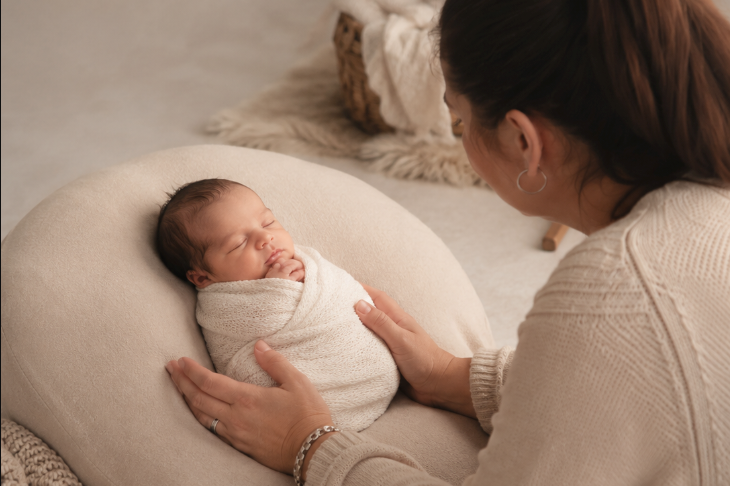
A newborn's neck cannot yet support the weight of their own head. Every single pose — no matter how relaxed or natural it looks in the final image — needs to account for this: The head and neck must be fully supported at all times, either by the photographer's own hands, a parent's hands just out of frame, or careful physical positioning that doesn't rely on the baby's own strength.
Wraps need to be snug, never restrictive. Too loose, and a wrap can shift or unravel mid-pose. Too tight, and it can restrict breathing or circulation. Getting this balance right takes real practice, not guesswork.
Chin-to-chest positions are watched closely. Several classically "cute" newborn poses involve the chin tucked toward the chest — but overly flexing a newborn's neck this way can partially restrict their airway. An experienced photographer keeps this angle gentle and brief, and adjusts immediately if there's any sign of strain.
Nothing Is Left Truly Unsupported
Many of the most iconic newborn images — baby appearing to hang in a sling, or curled inside a bucket with nothing holding them — are not what they seem. In safe, professional practice, these images are either built from multiple safely-supported shots combined afterwards, or the baby is fully supported by hidden hands throughout, just outside the frame. A baby is never left balanced, unsupported, or unattended on a raised or unstable surface for the sake of a photo — not even for a second.
Watching the Baby, Not Just the Camera
Throughout a session, a properly trained photographer is reading the baby's body constantly, not just checking the shot:
Skin colour — watching for any dusky, blue, or pale tinges, particularly around the lips and fingertips, which can signal a breathing or circulation issue
Breathing — rate, rhythm, and effort, since shallow or laboured breathing needs an immediate response
Muscle tone — a baby that suddenly goes very limp, or unusually stiff, needs to be checked immediately
Sounds of distress — grunting, straining, or a cry that won't settle no matter what's tried
Temperature — Warm Enough, Never Too Warm
Newborns regulate their own temperature poorly, so studios are deliberately kept warmer than what feels comfortable for adults. But there's a real balance here too: overheating carries its own risks, so a good studio is monitoring room temperature carefully rather than simply cranking the heat and hoping for the best — and watching baby for flushed skin or sweating, not just relying on a thermostat.
The Details Parents Rarely Think to Ask About
Hygiene — wraps, props, and surfaces should be freshly laundered or sanitised between every single family, given how vulnerable newborn immune systems still are.
Illness policy — a responsible studio will reschedule rather than photograph a baby (or work with a photographer) who's unwell, even if it's inconvenient.
Session pace — genuine safety means working entirely around the baby's feeding and sleep needs, not pushing through a tired, hungry, or overstimulated baby to "get the shot."
Fontanelle awareness — the soft spot on a newborn's head is handled with extra care and never under direct pressure.
Position changes — staying in one pose too long can affect circulation and comfort, so poses are rotated regularly rather than held indefinitely.
Studio environment — proper newborn studios also think about the basics: safely positioned heaters, no loose cords or trip hazards near where baby is being handled, and stable, secure furniture for every prop used.
Why Training Actually Matters Here
Because there's no licensing requirement, the only thing separating a genuinely safety-trained photographer from someone who's simply watched a few online tutorials is their own choice to pursue real training — newborn-specific safety courses, current first aid certification, and ideally, hands-on mentorship from an experienced newborn photographer before ever working solo.
When you're researching who to book, it's entirely reasonable to ask directly: What newborn-specific safety training have you done? Are you first aid certified? What happens if my baby becomes unsettled or unwell during the session? A photographer who takes safety seriously will never be defensive about these questions — they'll usually be relieved you asked.
At Manawa, every session is built around newborn safety first — full first aid and newborn safety training, careful pacing around your baby's needs, and complete transparency about how every pose is achieved.
Get in touch if you'd like to talk any of this through before booking.
Frequently Asked...
Is newborn photography regulated by any government body?
In most countries, including New Zealand, the UK, and the US, there is no government licensing or mandatory certification required to work as a newborn photographer. Training and safety standards are entirely down to the individual photographer.
What newborn poses are considered risky?
Poses that flex the neck too far forward (chin tightly to chest), or that appear to leave a baby unsupported on an elevated or unstable surface, carry the most risk if not handled correctly. In safe practice, these are either avoided, heavily modified, or achieved through composite imagery with full support at every stage.
What questions should I ask a newborn photographer before booking?
Ask about their specific newborn safety training, whether they hold current first aid certification, how they handle an unsettled or unwell baby during a session, and what their hygiene practices are between clients.
How can I tell if a "hanging" or "floating" newborn photo was actually safe to take?
Genuinely safe versions of these images are built from separate, fully supported shots combined afterwards, or use hidden hands and supports just out of frame. At no point should an unsupported newborn left balanced or hanging unassisted for a photograph.
About the Author
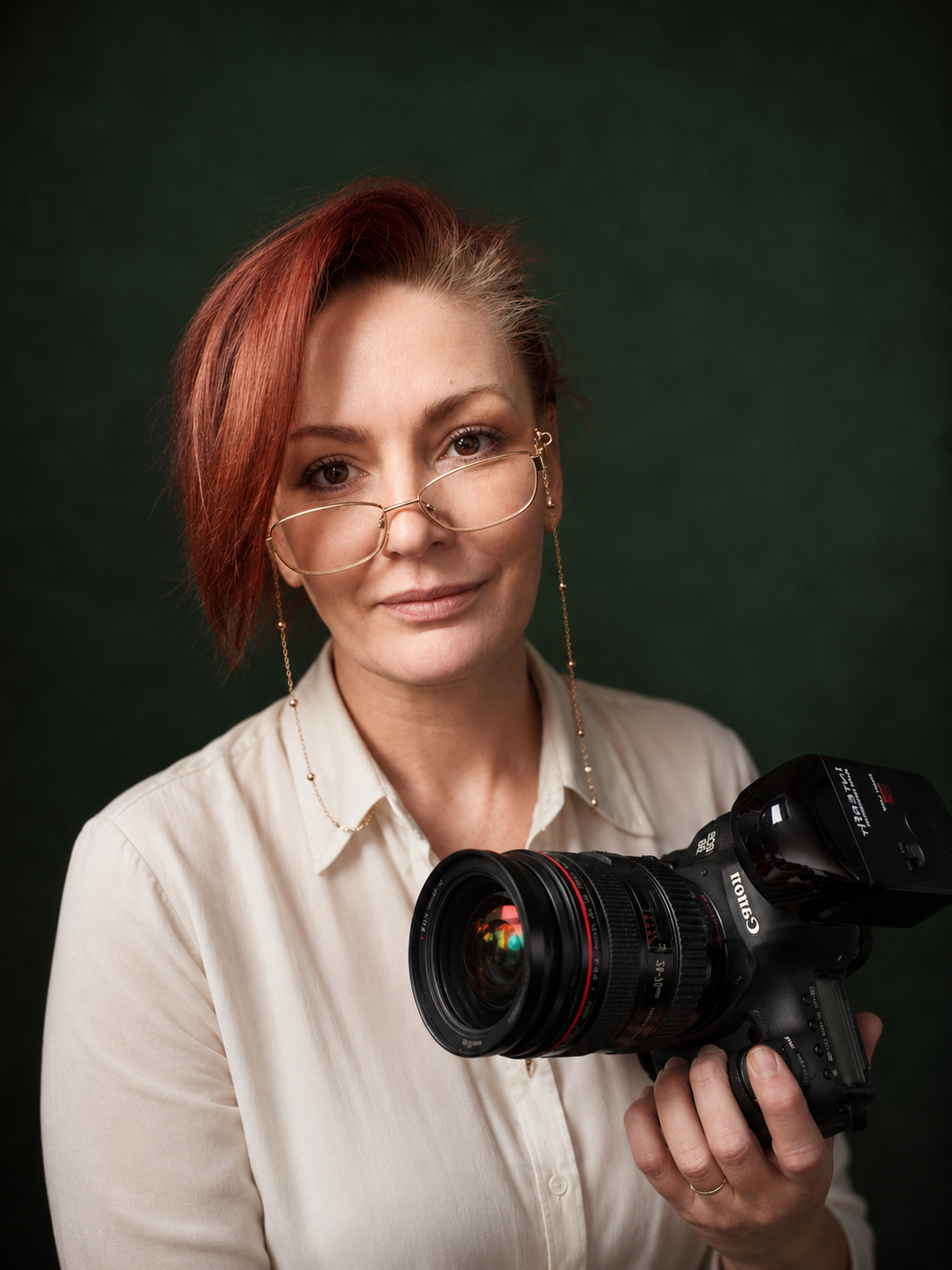
Emma is the photographer and founder behind MANAWA, based in Auckland, New Zealand. With over 20 years' experience photographing maternity, newborn, and family sessions, she is an award-winning photographer through the International Newborn Photography Competition and Awards (INPCA) and a regular contributing photographer for Bump, Baby & Beyond magazine. Emma's work is bold, soulful, and editorial — creating images designed to help every child feel they truly belong.